For many individuals grappling with hair loss, the search for effective solutions can lead to considerable frustration and despair. One treatment often raised in discussions about reversing hair loss is finasteride. This raises the question: does finasteride work for hair loss? In this article, we’ll explore how it functions, the evidence supporting its use, and other complementary therapies you might consider for a comprehensive approach to hair restoration.
What is Finasteride?
Finasteride is an oral medication initially developed to treat benign prostatic hyperplasia (BPH) but has since gained prominence as a treatment for male pattern baldness, or androgenetic alopecia. It works primarily by inhibiting the conversion of testosterone to dihydrotestosterone (DHT), a hormone linked to hair follicle shrinkage and loss.
The Science Behind Hair Loss and DHT
Understanding whether finasteride works requires a closer look at the relationship between DHT and hair loss. DHT is a potent derivative of testosterone that binds to androgen receptors in hair follicles. For individuals genetically predisposed to hair loss, this binding leads to the miniaturization of hair follicles, resulting in thinner strands and, eventually, hair loss.
The mechanism of finasteride is straightforward: by reducing the levels of DHT in the bloodstream, finasteride aims to prevent this destructive process, allowing hair follicles to thrive. Evidence suggests that finasteride can effectively halt hair loss and even promote regrowth for many men. Clinical studies have shown that about 80-90% of men experience a reduction in hair loss with consistent finasteride use.
The Evidence: Does Finasteride Work for Hair Loss?
Numerous clinical trials support the efficacy of finasteride as a hair loss treatment. One pivotal 5-year study demonstrated that participants taking finasteride saw significant hair regrowth compared to those on a placebo. The results were consistent: after two years of treatment, around 66% of men experienced an increase in hair count. However, results can vary based on individual factors, including the extent of hair loss at the start of treatment.
It’s essential to manage expectations. While finasteride can slow hair loss and stimulate regrowth, it may not work equally well for everyone. Factors like age, the degree of hair loss, and genetic predisposition can influence outcomes. If you seek a more aggressive approach or experience limited success with finasteride, combining it with other therapies might be beneficial.
Complementary Solutions: Expanding Your Options
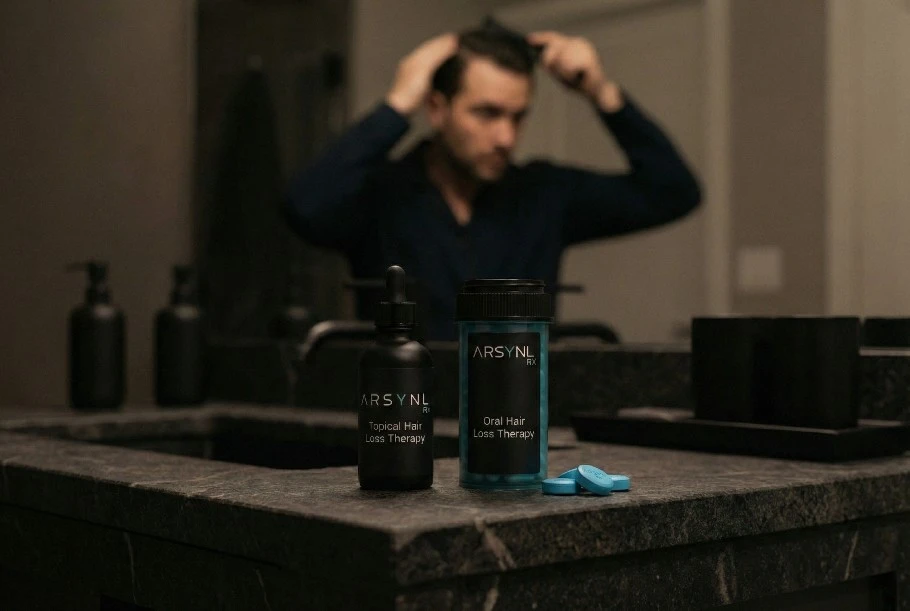
For those looking for broader solutions to combat hair loss, various complementary therapies can enhance the efficacy of finasteride or serve as alternatives. One option is ARSYNL Rx’s Men’s Hair Loss solutions, which targets DHT and follicles more effectively.
Additionally, adding erectile dysfunction medications like Sildenafil or Tadalafil can promote overall hormonal balance, which may positively affect your hair. If you’re open to exploring peptide therapy, consider Sermorelin, which may aid in the body’s natural regenerative processes.
What to Expect: Results and Timeline
For most individuals taking finasteride, noticeable results can appear within three to six months. Initially, hair shedding might increase as weaker hairs make way for newer, stronger growth—a process known as “shedding phase.” After this period, users often experience a halt in hair loss, followed by new hair growth over the next year or more. However, continued use is crucial to maintain results, as discontinuation can lead to a reversal of progress.
How to Get Started with ARSYNL Rx
If you’re ready to take action against hair loss, starting your journey with ARSYNL Rx is straightforward. Our platform allows you to book a consultation online where licensed healthcare providers will evaluate your needs and may recommend finasteride along with other therapies tailored to your specific situation.
Our consultation process is designed to ensure your comfort, privacy, and confidence. By addressing your hair loss concerns and potential treatment options, you can make informed decisions that align with your health goals.
FAQ
1. Is finasteride safe to use?
Finasteride is generally considered safe when prescribed by a licensed healthcare provider. However, discussing potential side effects, such as sexual dysfunction, is crucial during a consultation.
2. Can women use finasteride for hair loss?
Finasteride is not recommended for women, particularly those who are or may become pregnant, as it can cause birth defects. Women experiencing hair loss should consult a healthcare provider for alternative therapies.
3. How long do I need to take finasteride to see results?
Most users begin seeing results within three to six months. However, individual results may vary, and some may require more time to notice significant changes.
4. What if finasteride doesn’t work for me?
If finasteride doesn’t deliver the results you expect, consider other options available through ARSYNL Rx. Our range of therapies can be personalized to suit your unique health profile.
If you’re looking to combat hair loss effectively, ARSYNL Rx offers comprehensive solutions tailored to your needs. Take the first step towards restoring your confidence by consulting with us today at arsynl.com.
This article is for informational purposes only and does not constitute medical advice. All therapies offered through ARSYNL Rx require a consultation with a licensed U.S. provider. Results may vary by individual. Visit arsynl.com to learn more.