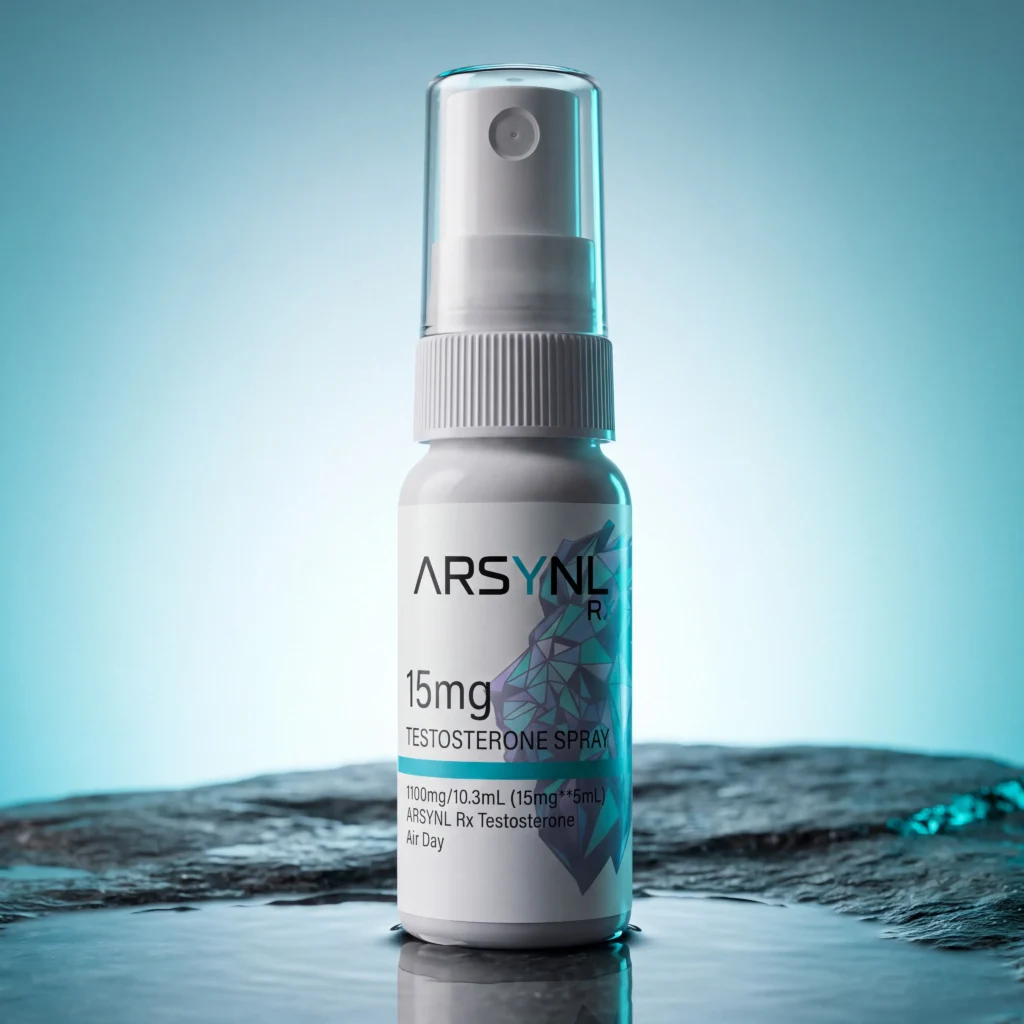

Testosterone sprays offer a needle-free way to administer prescription testosterone through the skin. But if you’re considering a transdermal testosterone product, you may have an important question: can the medication transfer to your partner through physical contact?
It’s a reasonable concern, especially if you share a bed, have frequent skin-to-skin contact, or live with children.
Yes, secondary exposure is a recognized risk with certain topical testosterone medications. Testosterone remaining on treated skin can potentially transfer to another person through direct contact.
However, the degree of risk depends on the formulation, application method, amount of medication remaining on the skin, and whether appropriate precautions are followed.
Understanding this risk is part of making an informed decision about testosterone therapy.
How Does Transdermal Testosterone Work?
Transdermal testosterone is applied to the skin rather than administered through an injection.
The medication is formulated to allow testosterone to pass through the skin and enter the body.
Different products may use gels, solutions, patches, or spray-based delivery formats.
These products are not necessarily interchangeable. They can differ in their ingredients, application sites, absorption characteristics, and prescribing instructions.
ARSYNL Rx offers testosterone HypoSpray® therapy, a needle-free transdermal testosterone formulation available for eligible patients through provider-guided care.
For some patients, a daily spray may be a format worth discussing with a licensed medical professional.
However, choosing a transdermal option also means understanding how to apply medication correctly and how to reduce the possibility of exposing other people.
What Is Secondary Testosterone Exposure?
Secondary exposure happens when someone who has not been prescribed testosterone comes into contact with medication that was applied to another person’s skin.
With some topical testosterone formulations, residual medication may remain on the application area after use.
If another person’s skin comes into contact with that area, transfer may occur.
The FDA-approved labeling for certain topical testosterone products includes warnings about secondary exposure to women and children.
These warnings are based on documented concerns involving unintended testosterone exposure through contact with treated skin.
Importantly, not every topical formulation has the same transfer characteristics.
A safety finding from one product should not automatically be assumed to establish the exact risk of another.
Patients using compounded testosterone sprays should ask their prescribing provider or dispensing pharmacist about any formulation-specific transfer information and precautions.
Can Testosterone Transfer After the Spray Dries?
This is one of the most important questions to ask.
Some people assume that once a topical medication feels dry, it is no longer present on the skin.
That assumption may be incorrect.
For certain FDA-approved topical testosterone medications, instructions recommend covering the application site after drying and washing the site before anticipated direct skin contact.
This indicates that drying alone does not necessarily eliminate all potential for transfer.
With testosterone HypoSpray®, patients should follow the instructions supplied by their prescribing provider and pharmacy.
The product’s application characteristics should not be used to assume that secondary exposure is impossible.
Even if a spray is designed for convenient daily use, convenience does not replace medication safety precautions.
Could Testosterone Exposure Affect Women?
Women naturally produce testosterone, but their typical circulating concentrations are substantially lower than those of adult men.
Unintended exposure to someone else’s testosterone medication can create unnecessary hormonal exposure.
For certain topical testosterone products, reported signs of secondary exposure in women include acne and changes in body hair.
Other androgen-related changes may also be medically concerning.
This does not mean brief accidental contact will necessarily cause symptoms.
The degree of exposure, frequency of contact, and other factors matter.
However, repeated exposure should be avoided, and suspected exposure deserves discussion with a healthcare professional.
The same principle applies even if a woman has independently been prescribed testosterone therapy.
A prescribed hormone plan does not make exposure to another person’s medication appropriate.
Each individual’s dose and monitoring plan should be managed separately.
Why Is Accidental Exposure Especially Concerning for Children?
Children should not come into contact with prescription testosterone residue.
FDA medication guides for some topical testosterone products warn that accidental exposure has been associated with unexpected signs of puberty in children.
Potential concerns include unusual hair growth, genital changes, and other signs of androgen exposure.
Parents and caregivers using testosterone medications should take precautions to prevent children from touching treated skin or accessing the medication itself.
This may include careful storage, appropriate clothing coverage, handwashing, and following the product’s exact application instructions.
If a child may have been exposed and develops concerning symptoms, contact a pediatric healthcare professional promptly.
The risk of unintended exposure is an important topic to discuss before starting any topical hormone medication.
How Can Patients Reduce the Risk of Skin Transfer?
The appropriate precautions depend on the specific product and its instructions.
For FDA-approved topical testosterone products, commonly recommended measures include washing hands after application, allowing the medication to dry as directed, covering treated areas with clothing, and washing the application site before anticipated direct skin contact.
If another person touches an unwashed application area, instructions for certain products recommend washing the contacted skin with soap and water.
However, these are general precautions drawn from existing topical testosterone products.
They should not replace formulation-specific instructions for testosterone HypoSpray® or any other compounded medication.
Patients should ask their pharmacist exactly where the medication should be applied, how long it should remain undisturbed, whether the site should be covered, and what precautions are necessary before close physical contact.
Do not assume instructions for an underarm gel or solution apply identically to a wrist or forearm spray.
What About Hugging, Sleeping Together, and Intimacy?
Physical closeness is an everyday part of many relationships.
Patients considering testosterone spray may wonder whether hugging their partner, sharing blankets, sleeping together, or having sex creates concerns.
The answer depends on the possibility of direct contact with a treated application area and the instructions for that formulation.
Skin-to-skin contact with medication residue may be more relevant than simply being in the same room or sharing a bed.
However, fabric, contact timing, and application practices can affect exposure risk.
Rather than making assumptions about what is safe, patients should ask their provider for practical guidance about their normal routine.
For example, someone applying medication to the inner forearm or wrist may need different practical precautions from a patient using a product applied to the shoulders.
Understanding the exact application area is important.
Is a Testosterone Spray Safer Than an Injection When It Comes to Transfer?
Injectable testosterone and transdermal testosterone involve different administration methods.
An injection does not create the same treated-skin residue associated with topical application.
However, injectable therapy has its own administration requirements and potential risks.
It would be misleading to describe one approach as universally safer or better based only on this distinction.
For patients who prefer non-injectable formats, testosterone spray may be worth discussing, provided they understand the appropriate precautions.
For patients concerned about frequent skin contact with children or partners, the transfer question should be part of the treatment-selection discussion.
The right choice depends on medical eligibility, preferences, safety considerations, and provider judgment.
What Is Different About Testosterone HypoSpray®?
Testosterone HypoSpray® is a needle-free transdermal formulation offered through ARSYNL Rx for eligible patients.
The broader HypoSpray® delivery technology is developed, owned, and controlled by TDSC / HypoSpray Pharma.
The format provides another way to discuss prescription testosterone administration without using an injection.
However, its specific transfer risk should not be assumed to be identical to or lower than that of an FDA-approved testosterone gel or solution without supporting clinical evidence.
Because testosterone HypoSpray® is a compounded formulation, it has not undergone the FDA approval process used to establish the safety and effectiveness of an approved medication.
Patients should obtain individualized administration and exposure-prevention instructions from their provider and dispensing pharmacy.
What Should You Ask Before Starting Testosterone Spray?
Before beginning a transdermal testosterone prescription, consider asking:
- Where exactly should the spray be applied?
- What should I do immediately after application?
- How can I reduce the possibility of exposing my partner?
- What precautions should I take around children?
- How long should I avoid direct contact with the application area?
- Should the treated area be covered with clothing?
- What should I do if someone accidentally touches the treated skin?
- What monitoring is needed to evaluate my testosterone levels?
- Are there other administration formats worth considering?
These practical questions can help patients understand the responsibilities associated with topical medication use.
How ARSYNL Rx Approaches Provider-Guided Testosterone Care
ARSYNL Rx offers eligible patients a discreet telehealth pathway for discussing testosterone-related concerns and available prescription options.
Licensed medical professionals can review health history, symptoms, laboratory results, and individual preferences before determining whether therapy is appropriate.
For patients interested in testosterone HypoSpray®, that conversation should include medication administration, monitoring, and appropriate safety precautions.
The goal is not simply to select a needle-free format, but to make an informed decision about the complete treatment plan.
The Bottom Line
Testosterone can transfer from treated skin to another person with certain topical formulations, making secondary exposure an important safety consideration.
Drying time alone should not be assumed to eliminate this possibility.
Although testosterone sprays offer a different administration format from injections, patients still need to follow the specific application and exposure-prevention instructions provided for their medication.
ARSYNL Rx provides a provider-guided pathway for eligible adults interested in testosterone HypoSpray® and other testosterone-related options.
The best first step is to ask how the medication should be used safely in your everyday environment.
Medical Disclaimer: This article is educational and does not establish the transfer characteristics of testosterone HypoSpray®. Specific safety precautions should come from the prescribing clinician and dispensing pharmacist. Compounded medications are not FDA-approved, and their safety and effectiveness have not been evaluated through FDA approval.