If you are researching hair loss treatment, there is a good chance you have seen the same two names over and over again: finasteride and minoxidil. They are two of the most commonly discussed options for male pattern hair loss, and many men eventually ask the same question: can you use finasteride and minoxidil together?
In many cases, yes. Finasteride and minoxidil are often used together because they work in different ways. Finasteride helps address the hormonal side of male pattern hair loss by reducing the conversion of testosterone into DHT, a hormone strongly associated with androgenetic alopecia. Minoxidil, on the other hand, is typically used to support the hair growth cycle and help stimulate visible regrowth in thinning areas.
The American Academy of Dermatology says that if finasteride is part of a treatment plan, it may be taken alone or used with minoxidil. That is one reason the combination is so common in men’s hair restoration routines.
Still, “can you use them together?” is not the same as “should everyone use them together?” The right answer depends on the person, the type of hair loss, medical history, goals, side effect concerns, and provider guidance. ARSYNL Rx offers more information about online hair loss treatment for men for patients who want a provider-guided way to explore prescription-based options.
What Does Finasteride Do?
Finasteride is a prescription medication commonly used for male pattern hair loss. It works by inhibiting 5-alpha reductase, the enzyme involved in converting testosterone into dihydrotestosterone, better known as DHT. DHT can shrink hair follicles in genetically sensitive men, leading to gradual thinning, a receding hairline, and crown loss.
In simple terms, finasteride helps reduce one of the main drivers behind male pattern baldness. It is not a styling product, vitamin, or overnight fix. It is a long-term medication intended to slow further loss and, for some men, support regrowth over time.
Mayo Clinic notes that many men taking finasteride experience a slowing of hair loss, and some may see new hair growth. But consistency matters. Hair follicles respond slowly, so patients usually need to think in months, not days or weeks.
ARSYNL Rx explains more about DHT and pattern hair loss in its guide on how DHT causes male pattern baldness, which is a helpful starting point for understanding why finasteride is often part of a men’s hair loss plan.
What Does Minoxidil Do?
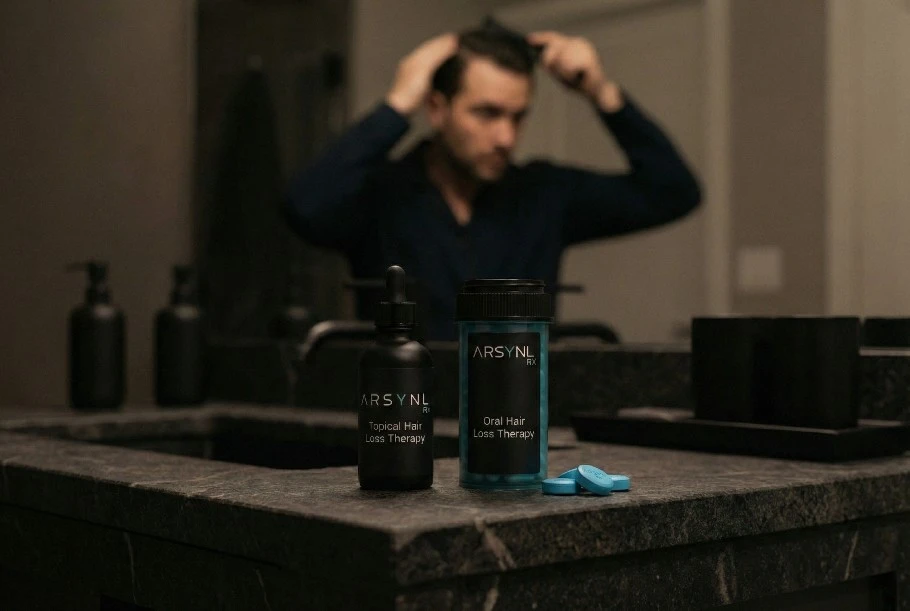
Minoxidil is commonly used as a topical hair loss treatment. It is available in forms such as foam or liquid, and it is often used on thinning areas of the scalp. Unlike finasteride, minoxidil does not primarily target DHT. Instead, it is used to help support the hair growth cycle and encourage thicker-looking growth in areas where follicles are still active.
That difference is important. Finasteride helps address the hormonal driver of pattern hair loss. Minoxidil helps support growth activity. Because they work through different mechanisms, they are often discussed as complementary rather than identical treatments.
Mayo Clinic notes that nonprescription minoxidil comes in forms such as liquid, foam, and shampoo, and that hair loss may return if treatment is stopped. This is one of the most important things patients should understand: minoxidil is not a one-month experiment. Like most hair loss treatments, it requires consistency.
Patients who are new to this topic may want to review ARSYNL Rx’s guide on how long hair loss medications take to show results before judging whether a treatment is working.
Why Are Finasteride and Minoxidil Often Used Together?
Finasteride and minoxidil are often used together because they target hair loss from different angles.
Think of it this way: finasteride helps reduce the DHT-related pressure on vulnerable follicles, while minoxidil helps create a better growth-supporting environment for follicles that are still capable of producing hair. One is more focused on slowing the underlying progression of androgenetic hair loss. The other is more focused on supporting visible growth.
That is why many men do not frame the decision as finasteride versus minoxidil. They ask whether a combination approach makes sense.
A systematic review and meta-analysis found that combined therapy with finasteride and topical minoxidil has been used for androgenetic alopecia and reviewed outcomes compared with minoxidil or finasteride alone. Other medical resources also discuss combination therapy as a common strategy for androgenetic alopecia.
For patients, the practical takeaway is simple: combination treatment may make sense when the goal is to both slow further loss and support regrowth. But the plan should still be individualized.
Is the Combination Better Than Using One Treatment Alone?
For some men, using both may be more effective than using one alone. However, results vary, and no treatment guarantees regrowth.
Someone with early thinning may do well with a simpler plan. Someone with more noticeable crown thinning or a strong family history of male pattern baldness may need a more comprehensive routine. Someone who cannot tolerate one medication may need a different approach entirely.
The stage of hair loss matters too. Hair loss treatment generally works best when follicles are still active. If an area has been completely bald for a long time, medications may have limited impact because the follicles may no longer be capable of producing meaningful growth.
This is why timing matters. Waiting until hair loss is advanced can make treatment harder. Men who notice early signs such as a widening part, thinning crown, increased shedding, or a receding hairline may benefit from getting evaluated sooner rather than guessing for years.
ARSYNL Rx’s overview of the 7 hair loss modalities can help patients understand why the right plan often depends on the stage and pattern of hair loss.
Can You Start Both at the Same Time?
Some patients may start finasteride and minoxidil together, while others may start one first. There is not one universal approach for everyone.
Starting both together may make sense when a provider wants to address hair loss aggressively from two angles. It can also be helpful for patients who want a fuller routine from the beginning. However, starting both at the same time can make it harder to tell which product is causing a side effect if one occurs.
Starting one first may make sense for patients who want to keep the routine simpler or who have concerns about tolerability. A provider may recommend one approach over another based on the patient’s pattern of loss, goals, medical history, and comfort level.
Patients should not assume that more products automatically means a better plan. A good hair loss routine should be strategic, not chaotic. ARSYNL Rx’s guide to hair loss treatment combinations explains why combination care should be built around the patient’s stage and goals.
How Long Does the Combination Take to Work?
Hair loss treatment is slow. That can be frustrating, but it is normal.
Most patients should not expect dramatic results in a few weeks. Hair grows in cycles, and visible changes take time. Some men may notice reduced shedding first. Others may see gradual thickening over several months. In many cases, meaningful evaluation takes at least several months of consistent use.
It is also possible to notice increased shedding early with minoxidil. This can scare patients, but early shedding may happen when hairs shift through the growth cycle. The key is knowing what is expected, what is excessive, and when to check in with a provider.
Stopping too early is one of the most common mistakes. A patient may start treatment, panic when results are not immediate, quit after a month, and then assume nothing works. In reality, the treatment may not have had enough time.
Patients can review ARSYNL Rx’s article on the hair growth cycle to better understand why patience is part of any hair restoration routine.
Are There Side Effects?
Yes, side effects are possible, which is why provider guidance matters.
Finasteride may cause side effects in some patients, including sexual side effects such as changes in libido or sexual function. Mayo Clinic notes that rare side effects of finasteride can include diminished sex drive and sexual function. Patients should discuss concerns with a provider before starting and report any side effects that develop.
Minoxidil may cause scalp irritation, dryness, itching, flaking, or unwanted hair growth if it spreads to areas where hair growth is not desired. Mayo Clinic notes that topical minoxidil can stain clothing or bedding if the scalp is not fully dry, and that certain scalp conditions may increase absorption and side effect risk.
Side effects do not mean everyone will have a problem. Many patients tolerate treatment well. But no hair loss medication should be treated as risk-free. Patients should know what to watch for and when to ask for help.
Can Women Use Finasteride and Minoxidil Together?
This question requires extra caution. Minoxidil is commonly discussed for both men and women, depending on the form, concentration, and provider guidance. Finasteride is more complicated for women and is not appropriate for everyone.
Women who are pregnant, trying to become pregnant, or could become pregnant need to be especially careful around finasteride. Mayo Clinic notes that finasteride can be absorbed through the skin and may cause birth defects in male babies.
Women with hair loss should not assume that a men’s hair loss stack is automatically right for them. Female hair loss can involve genetics, hormones, thyroid issues, iron deficiency, stress, postpartum changes, menopause, medications, autoimmune issues, and other factors. A provider should evaluate the cause before recommending treatment.
For women researching hair loss, ARSYNL Rx’s guide to hormone therapies and hair regrowth for women may be a useful starting point.
What Is a Hair Loss Stack?
A hair loss stack is a planned combination of treatments that work together. For many men, finasteride and minoxidil are the foundation of that stack. Other options may include topical formulations, DHT-focused therapies, scalp support, low-level laser therapy, supplements when appropriate, or other provider-guided treatments.
The point of a stack is not to use every product available. The point is to address the most relevant causes of hair loss in a structured way.
For example, a man with classic androgenetic alopecia may need DHT support and growth support. Someone with shedding after rapid weight loss may need a different approach focused on nutrition, labs, and temporary shedding triggers. Someone with scalp inflammation may need the scalp condition addressed before any growth plan can perform well.
That is why a provider-guided approach is better than guessing. ARSYNL Rx explains how patients can explore online hair loss prescriptions without starting from scratch or relying on random products.
Should You Use Finasteride and Minoxidil Forever?
Hair loss treatment usually requires ongoing maintenance. If a medication is helping maintain hair, stopping it may allow hair loss to continue over time. Mayo Clinic notes that hair loss may begin again within a few months after minoxidil treatment is stopped.
This is one of the most important expectations to set. Finasteride and minoxidil are not usually “one cycle and done” treatments. They are maintenance-based therapies for a chronic, progressive condition.
That does not mean a patient can never change the plan. A provider may adjust products, dosing, or treatment strategy over time. But patients should understand that consistency is usually central to maintaining results.
Who Should Ask a Provider Before Starting?
Everyone should ask a provider before starting prescription hair loss treatment, especially finasteride. This is even more important for patients who have a history of sexual side effects, mood concerns, fertility questions, prostate issues, medication interactions, scalp irritation, heart concerns, pregnancy risk, or unclear hair loss patterns.
Patients should also ask for help if the hair loss is sudden, patchy, associated with itching or pain, or happening alongside unexplained weight loss, fatigue, illness, or major stress. Not all hair loss is male pattern baldness, and treating the wrong condition can waste time.
ARSYNL Rx’s page on getting a hair loss prescription online can help patients understand how a telehealth process may support evaluation and treatment access.
The Bottom Line
Yes, finasteride and minoxidil can often be used together, and many men use them as part of a hair loss stack. Finasteride helps address the DHT-related driver of male pattern hair loss, while minoxidil supports the growth side of the equation. Together, they may offer a more complete approach than either option alone for certain patients.
But the best hair loss plan is not just the most aggressive one. It is the one that fits the patient’s hair loss type, goals, medical history, risk tolerance, and ability to stay consistent.
For men dealing with thinning hair, the smartest next step is not panic-buying products. It is understanding the cause, choosing a plan that targets that cause, and sticking with it long enough to evaluate progress.
ARSYNL Rx offers provider-guided access to hair loss treatment for men online, including options that may include finasteride, minoxidil, or a broader hair restoration routine when appropriate.
Hair loss treatment works best when it is strategic. Finasteride and minoxidil may be a strong combination for many men, but the right plan should always be guided by evaluation, education, and realistic expectations.