Growth hormone gets talked about a lot in conversations around aging, energy, recovery, fitness, body composition, and longevity. Because of that, many people hear about sermorelin and assume it is simply another way of “taking HGH.” But sermorelin and HGH are not the same thing.
Sermorelin is commonly discussed as a peptide that relates to the body’s growth hormone signaling system. Mayo Clinic describes sermorelin as a synthetic version of a naturally occurring substance that causes the pituitary gland to release growth hormone, and notes that it is available only with a doctor’s prescription. HGH, often discussed medically as somatropin, is a human growth hormone analog used for specific medical indications and is also a prescription medication.
That difference matters. Sermorelin is not the same as directly taking growth hormone. Instead, it is generally discussed in relation to stimulating the body’s own growth hormone pathways when clinically appropriate. HGH, by contrast, refers to direct growth hormone replacement or administration in specific medical contexts.
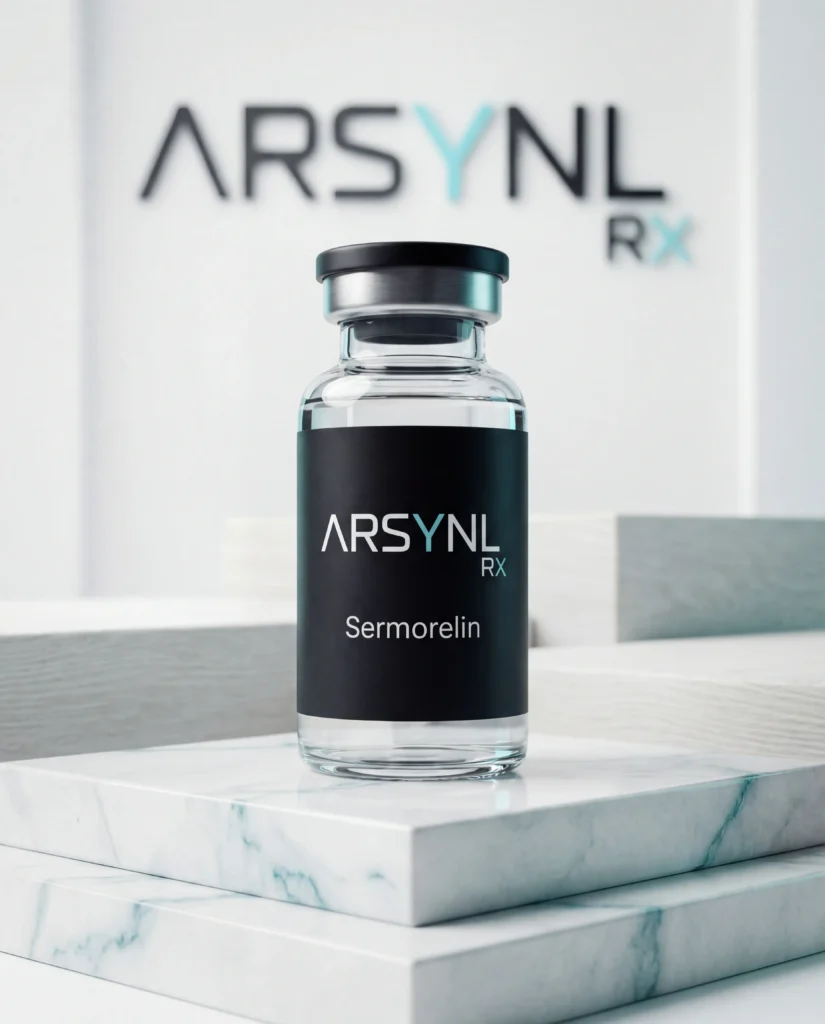
At ARSYNL Rx, sermorelin is offered through a provider-guided model for eligible patients. That means it should not be approached as a shortcut, anti-aging hack, or general wellness product. It should be discussed with licensed medical professionals who can review health history, symptoms, goals, and whether peptide support may be appropriate.
What Is Sermorelin?
Sermorelin is a synthetic peptide related to growth hormone-releasing hormone, often shortened to GHRH. In simple terms, it is discussed because of its relationship to the pituitary gland and the body’s natural growth hormone signaling process.
The pituitary gland is a small gland in the brain that helps regulate several hormones, including growth hormone. Instead of supplying growth hormone directly, sermorelin is understood as working through the body’s signaling system. This is the main reason people often describe sermorelin differently from HGH.
However, that does not mean sermorelin is appropriate for everyone. It is still a prescription medication, and its use should be based on medical evaluation rather than online trends or assumptions. Mayo Clinic specifically notes that sermorelin injection is available only by prescription.
What Is HGH?
HGH stands for human growth hormone. In medical contexts, the prescription form is commonly referred to as somatropin. MedlinePlus describes somatropin as a human growth hormone analog and notes that it is used for specific medical conditions, including growth failure caused by growth hormone deficiency and certain other conditions.
This is important because “HGH” is often discussed casually online, but prescription growth hormone is not a general wellness supplement. It is a regulated medication with specific uses, monitoring needs, and potential risks. MedlinePlus advises patients to tell their doctor about their medications and medical history before using somatropin, including conditions such as diabetes, adrenal insufficiency, pancreatitis, thyroid problems, and other health concerns.
Sermorelin vs. HGH: The Core Difference
The simplest way to understand the difference is this:
Sermorelin is generally discussed as a signal-supporting option that encourages the pituitary gland’s own growth hormone release pathway.
HGH, or somatropin, is direct human growth hormone administration used for specific medical indications.
That does not make one automatically better than the other. It means they are different approaches. The right conversation depends on the patient’s medical history, goals, symptoms, lab work when appropriate, and provider judgment.
For patients exploring longevity-oriented care, recovery support, or hormone-related wellness, this distinction can help them ask better questions. Instead of asking, “How do I take HGH?” a more responsible question may be, “Should I be evaluated for growth hormone-related concerns, and are there provider-guided options that may be appropriate for me?”
Why People Ask About Sermorelin
People often become interested in sermorelin because they feel like their energy, recovery, sleep quality, body composition, or overall vitality has changed. This can happen gradually, especially for adults in their 30s, 40s, 50s, and beyond.
However, these symptoms can have many possible explanations. Poor sleep, stress, low protein intake, overtraining, undertraining, thyroid issues, low testosterone, metabolic concerns, medications, alcohol use, nutrient deficiencies, and mental health can all affect how someone feels.
That is why sermorelin should not be treated as the automatic answer to feeling tired, older, or less resilient. A provider-guided evaluation can help determine whether sermorelin is worth discussing or whether another issue should be addressed first.
Why “Taking HGH” Is Not the Same Conversation
Some people search for sermorelin because they are trying to avoid “taking HGH,” while others search for HGH because they want faster or more dramatic results. Both mindsets can miss the point.
Prescription growth hormone products are used for specific medical conditions. Somatropin can have side effects and requires provider oversight. MedlinePlus instructs patients to review medication information before first use and to tell their clinician about other medications and health conditions.
DailyMed prescribing information for somatropin products also includes important warnings and contraindications, including warnings related to acute critical illness and other serious risks in certain patients.
This is why ARSYNL Rx’s approach is provider-led. Patients should not be trying to self-select between sermorelin and HGH based on internet claims, fitness forums, or anti-aging marketing. These are medical conversations that require context.
Does Sermorelin Increase Growth Hormone?
Sermorelin is described as causing the pituitary gland to release growth hormone. However, that statement should not be stretched into exaggerated claims about guaranteed energy, fat loss, muscle gain, sleep improvement, or anti-aging results.
Individual response can vary. A provider may consider medical history, current symptoms, medications, risk factors, and lab work when appropriate before determining whether sermorelin is suitable. Patients should also understand that feeling tired or struggling with recovery does not automatically mean growth hormone signaling is the cause.
Who Might Ask About Sermorelin?
Someone may ask a provider about sermorelin if they are interested in longevity-oriented wellness, recovery, body composition, or age-related changes. But interest does not equal eligibility.
A licensed medical professional may want to understand:
How well you sleep
Whether you wake up rested
What your energy is like throughout the day
Whether you are recovering from workouts
Whether weight, appetite, or metabolism has changed
Whether testosterone, thyroid, B12, or other markers should be reviewed
What medications or supplements you currently use
Whether you have medical conditions that affect safety or eligibility
This broader review matters because the symptoms that lead people to search for sermorelin can overlap with many other health concerns.
How ARSYNL Rx Approaches Sermorelin
ARSYNL Rx offers sermorelin through a discreet telehealth model for eligible patients. The process is designed to begin with a confidential online intake, followed by provider review when appropriate.
Rather than treating sermorelin as a one-size-fits-all wellness product, ARSYNL Rx positions it as one option that may be discussed under medical guidance. Depending on the patient, a provider may also discuss other areas of care, such as hormone support, metabolic health, sleep, recovery, nutrition, or wellness therapies.
For example, someone asking about sermorelin because they feel tired all the time may also need to explore sleep quality, testosterone, thyroid markers, B12 status, stress, or blood sugar patterns. Someone asking about recovery may need to review training load, protein intake, sleep, inflammation, and other factors.
The point is not to assume sermorelin is the answer. The point is to evaluate the full picture.
Is Sermorelin an Anti-Aging Treatment?
Sermorelin is often discussed in longevity and age-related wellness conversations, but it should not be described as an anti-aging cure or guaranteed way to reverse aging. Aging is complex, and no prescription peptide should be marketed as a shortcut to youth.
A more responsible way to frame sermorelin is as a provider-guided option that may be considered for eligible patients interested in growth hormone-related support. That conversation should happen alongside realistic expectations about sleep, nutrition, exercise, stress, metabolic health, and overall medical history.
ARSYNL Rx’s broader therapy model supports that kind of conversation through its therapy menu, where patients can explore provider-guided options across hormone support, metabolic health, longevity-oriented wellness, sexual health, hair loss, and other categories.
What Should You Ask Before Considering Sermorelin?
Before considering sermorelin, it can help to ask a provider:
What symptoms or goals make sermorelin worth discussing?
What should be reviewed before deciding if I am eligible?
How is sermorelin different from direct HGH?
What risks or side effects should I understand?
Are there medical conditions that would make sermorelin inappropriate?
Should labs be reviewed first?
Could sleep, testosterone, thyroid, nutrition, or metabolic health be contributing instead?
What kind of follow-up or monitoring would be needed?
What expectations are realistic?
These questions help keep the conversation grounded in medical guidance rather than hype.
The Bottom Line
Sermorelin and HGH are related to growth hormone, but they are not the same thing. Sermorelin is commonly described as a synthetic version of a naturally occurring substance that stimulates the pituitary gland to release growth hormone, while HGH or somatropin refers to direct human growth hormone administration for specific medical indications.
For patients interested in recovery, energy, body composition, or longevity-oriented wellness, the best first step is not self-diagnosing or choosing a product based on internet claims. It is getting evaluated.
ARSYNL Rx gives eligible patients a discreet, provider-led way to discuss sermorelin and other wellness options online. If sermorelin may be appropriate, that decision should be made by a licensed medical professional based on individual evaluation, health history, blood work when appropriate, and applicable medical standards.
Important Disclaimer: This content is for informational purposes only and is not medical advice. Sermorelin, HGH, somatropin, and other prescription options are not appropriate for everyone. Eligibility, prescribing decisions, dosing, monitoring, and follow-up should be determined by a licensed medical professional based on individual evaluation, blood work when appropriate, and applicable medical standards. Experiences vary.