
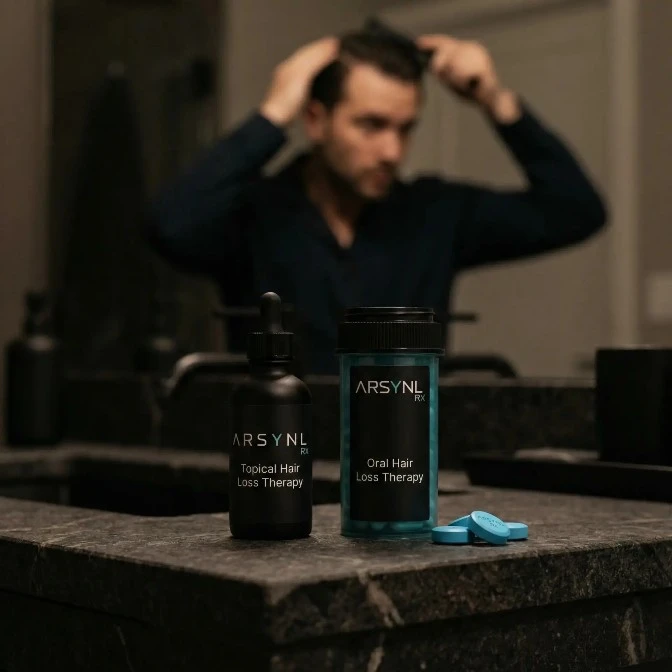
Noticing hair thinning at the temples can be one of the first moments a man realizes his hairline may be changing. It might show up in photos, under bright bathroom lighting, after a haircut, or when styling your hair the same way you always have. At first, it may look subtle: a little more scalp near the corners, a sharper “M” shape, or one temple that seems to sit farther back than the other.
For many men, temple thinning feels frustrating because it can happen before the rest of the hair looks noticeably thin. You may still have decent density on top, but the corners of the hairline begin to recede. This is common, and it is often associated with male pattern hair loss, also called androgenetic alopecia. MedlinePlus describes male pattern baldness as the most common type of hair loss in men, usually following a pattern of a receding hairline and thinning at the crown.
That does not mean every change at the temples is automatically permanent genetic hair loss. Hairline changes can also be influenced by styling habits, stress shedding, scalp conditions, nutrition, medications, illness, or normal hairline maturation. The key is understanding the pattern, watching for progression, and knowing when to discuss it with a provider.
At ARSYNL Rx, men’s hair loss is approached through discreet, provider-guided care. For eligible men, men’s hair loss support may be discussed through an online consultation so a licensed medical professional can review symptoms, history, goals, and potential options when clinically appropriate.
Why the Temples Often Change First
The temples are one of the most noticeable areas of the hairline, so even a small change can feel dramatic. In male pattern hair loss, recession often begins near the front hairline or temples before becoming more obvious across the scalp. MedlinePlus Genetics notes that androgenetic alopecia in men can cause the hairline to move back and form a characteristic “M” shape.
This happens because certain hair follicles are more sensitive to androgen-related changes than others. In men with androgenetic alopecia, hair follicles can gradually shrink over time, producing thinner, shorter hairs before eventually producing less visible hair. This process is often called miniaturization.
Temple hair can be especially noticeable because it frames the face. Even if the total amount of hair loss is small, the visual impact can feel bigger than thinning in less visible areas.
Is Temple Thinning Always Male Pattern Hair Loss?
Not always. A receding hairline or thinning temples can be a sign of male pattern hair loss, but it is not the only possible explanation. Mayo Clinic lists hereditary hair loss as the most common cause of baldness, but also notes that hair loss can be related to medical conditions, medications, stress, hairstyles, or other factors.
Possible contributors to temple thinning may include:
Genetic male pattern hair loss
Stress-related shedding
Recent illness or major weight loss
Nutrient deficiencies
Tight hairstyles or repeated pulling
Scalp inflammation or irritation
Medication changes
Hormonal or metabolic factors
Normal hairline maturation
This is why pattern matters. If the temples are gradually receding over time and other men in your family have similar hair loss, male pattern hair loss may be more likely. If shedding happened suddenly across the whole scalp, another cause may be involved. If there is redness, scaling, pain, itching, or patchy hair loss, it is especially important to get evaluated.
What Is the Difference Between a Mature Hairline and Receding Temples?
Some men notice their hairline changes slightly from their teenage years into adulthood. A mature hairline can look a bit higher or more defined than a teenage hairline without necessarily meaning aggressive hair loss is happening.
A receding hairline, on the other hand, tends to keep moving back over time. The corners may deepen, the temples may thin, and the hairline may begin to form a more obvious “M” shape. It may also become harder to style hair forward because the corners no longer have the same density.
One way to tell the difference is to track changes over several months. Take consistent photos in the same lighting, with dry hair, from the front and both sides. Avoid obsessing daily, because lighting and styling can make the hairline look different from one day to the next.
Why Temple Hair Can Look Worse Under Bright Light
Many men first notice temple thinning under bright overhead lighting. This does not always mean hair loss suddenly got worse. Strong light can make the scalp more visible, especially near the hairline where density may naturally be lower.
Wet hair, short haircuts, oily hair, and certain styling products can also make thinning look more obvious. This can create anxiety because the hairline may look different in every mirror or photo.
Still, if temple visibility is becoming more noticeable over time, it may be worth paying attention. The earlier a man identifies a pattern, the sooner he can talk with a provider about whether hair loss support may be appropriate.
What Role Does DHT Play?
DHT, or dihydrotestosterone, is often discussed in relation to male pattern hair loss. Finasteride is one medication commonly associated with this pathway. MedlinePlus explains that finasteride is used for male pattern hair loss and works by blocking the body’s production of a male hormone in the scalp that stops hair growth.
That does not mean every man with temple thinning should automatically use finasteride or any other medication. Hair loss treatment decisions should depend on the cause of thinning, the stage of hair loss, medical history, side effect considerations, goals, and provider guidance.
For eligible men, ARSYNL Rx offers a discreet way to discuss men’s hair loss support with a licensed medical professional. The goal is not to guess based on a photo or panic over a changing hairline. The goal is to understand what may be happening and what options may be appropriate.
Is It Better to Act Early?
With many types of hair loss, early evaluation can be helpful. The American Academy of Dermatology notes that male pattern hair loss may begin as a receding hairline or bald spot and can continue for years. If the cause is androgenetic alopecia, the goal of provider-guided support is often to help address progression before thinning becomes more advanced.
That does not mean every man needs prescription treatment at the first sign of a slightly uneven hairline. But if you are noticing steady recession, increased shedding, or visible miniaturized hairs around the temples, it may be worth starting the conversation.
Waiting until hair loss feels severe can limit the conversation. Earlier evaluation gives a provider more context and may help you understand whether the issue is genetic hair loss, shedding, scalp irritation, or something else.
Could Stress or Weight Loss Affect the Temples?
Stress-related shedding usually affects the scalp more diffusely rather than only the temples. However, if your hairline is already vulnerable to genetic thinning, shedding can make existing temple recession more visible.
Major stress, illness, rapid weight loss, surgery, or significant dietary changes can sometimes lead to a temporary shedding pattern called telogen effluvium. This type of shedding often appears weeks or months after the trigger. It may not permanently affect the temples, but it can make thinning areas look more noticeable.
If temple thinning began after rapid weight loss, a major illness, severe stress, or a new medication, that context matters. A provider may want to review your timeline, symptoms, diet, medications, and overall health before assuming it is only male pattern hair loss.
What About Minoxidil and Finasteride?
Minoxidil and finasteride are two of the most commonly discussed options for male pattern hair loss. The American Academy of Dermatology notes that medical treatments for hereditary hair loss can include minoxidil and finasteride.
Minoxidil is often discussed as a topical option, while finasteride is a prescription medication. However, the right approach depends on the individual. Some men may be candidates for one option, a combination approach, or a different plan entirely. Others may need further evaluation before starting anything.
Because ARSYNL Rx already has deeper content on finasteride and minoxidil together, this article is not meant to replace a provider-guided discussion about specific medications. Instead, the key takeaway is that temple thinning should be evaluated in context before choosing a product.
When Should Men Talk to a Provider?
You may want to talk to a provider about thinning temples if:
Your hairline is steadily moving back
One or both temples look noticeably thinner
You see more shedding than usual
Hair feels finer around the front
You have a family history of male pattern hair loss
You are worried enough to keep checking it
You have scalp itching, redness, flaking, or irritation
Hair loss started after illness, stress, medication changes, or rapid weight loss
You want to understand options before the thinning becomes more advanced
A provider can help review whether your pattern sounds consistent with male pattern hair loss or whether another cause should be considered. In some cases, blood work, scalp evaluation, medication review, or referral to a dermatologist may be appropriate.
How ARSYNL Rx Helps Men Start the Hair Loss Conversation
Hair loss can feel personal. Many men do not want to talk about it until it becomes hard to ignore. Others feel overwhelmed by online advice, supplement ads, Reddit threads, and before-and-after photos that may not apply to their situation.
ARSYNL Rx offers a more discreet path. Through an online consultation, eligible men can discuss hair thinning, goals, medical history, and potential options with licensed medical professionals. The men’s hair loss page is designed for men who want provider-guided support instead of guessing which product or routine to try next.
This matters because temple thinning can trigger urgency, but panic rarely leads to the best decisions. A structured provider-guided process can help you understand what may be happening, what is realistic, and what options may be worth considering.
The Bottom Line
Hair thinning at the temples is often one of the earliest visible signs of male pattern hair loss, but it is not the only possible explanation. Genetics, DHT sensitivity, stress, illness, medication changes, scalp health, nutrition, and styling habits can all influence how your hairline looks.
If your temples are gradually thinning, the best next step is not to ignore it or panic-buy products. It is to get a clearer understanding of the pattern.
ARSYNL Rx gives eligible men a discreet way to explore provider-guided hair loss support online. If your hairline is changing, especially around the temples, a licensed medical professional can help review your concerns and discuss what options may be appropriate based on your individual profile.
Important Disclaimer: This content is for informational purposes only and is not medical advice. Hair loss concerns, medication decisions, dosing, monitoring, and follow-up should be discussed with a licensed medical professional based on individual evaluation and applicable medical standards. Experiences vary.