

Testosterone Therapy with HypoSpray® Physician-Guided Care Through ARSYNL Rx
At ARSYNL Rx, testosterone therapy is never about shortcuts. It’s about careful, physician-guided care designed to support your long-term health.
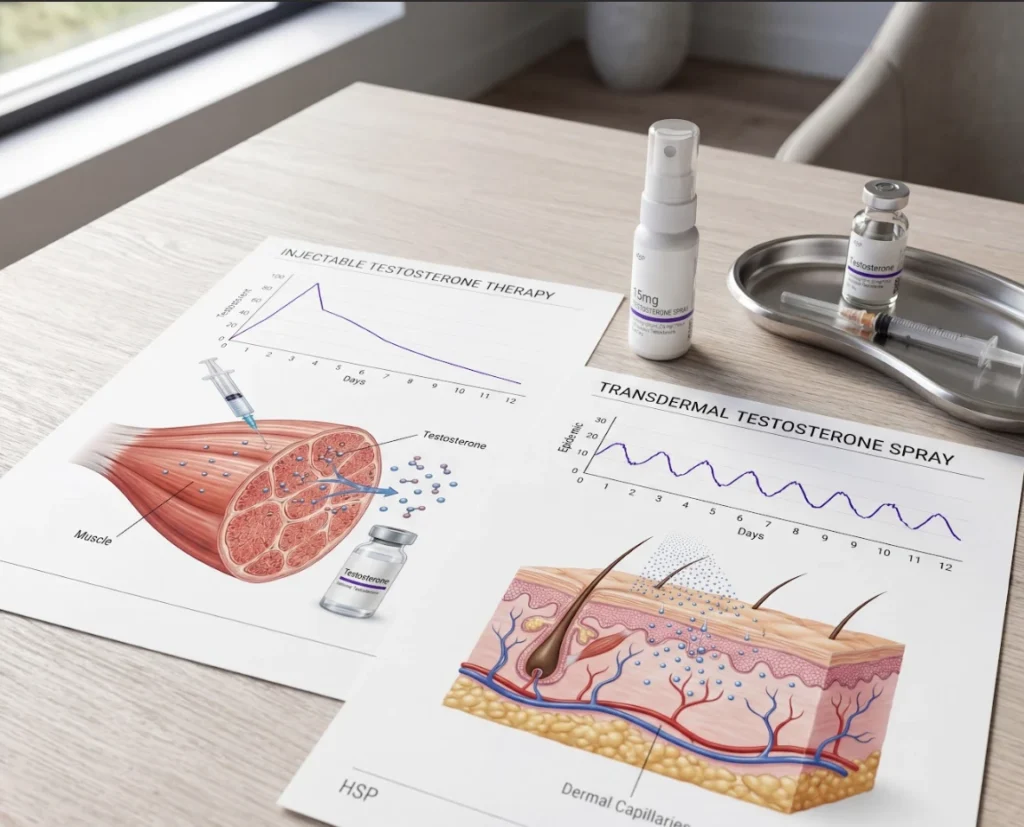
HypoSpray T delivers daily, physiologic testosterone through a needle-free transdermal spray designed to help maintain steady hormone levels without the peaks and troughs associated with injections.
This prescription therapy delivers testosterone through the skin using HypoSpray® transdermal technology. It is designed for simple daily use and fits easily into a consistent routine.
Every treatment plan at ARSYNL Rx begins with a medical consultation. Licensed providers review your labs, symptoms, and health history to determine whether therapy is appropriate for you.
If prescribed, medication is prepared by a licensed pharmacy partner and shipped directly to your door.
Testosterone therapy is not appropriate for everyone, and results vary from person to person.
Testosterone in the body is normally released in small amounts throughout the day.
HypoSpray® technology was designed to follow a similar daily rhythm.
HypoSpray T delivers daily, physiologic testosterone through a needle-free transdermal spray designed to help maintain steady hormone levels without the peaks and troughs associated with injections.
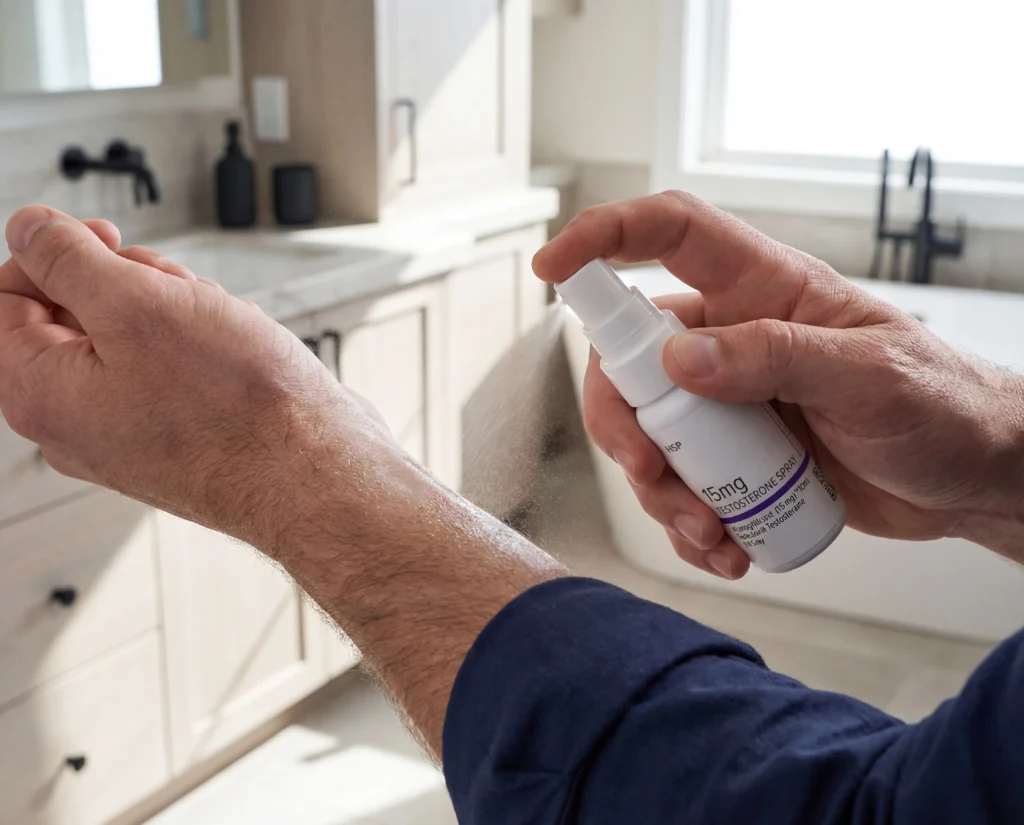
The spray is applied to the inner arm and absorbed through the skin. From there, testosterone enters the bloodstream and interacts with the body the same way natural testosterone does.
The goal of this approach is simple: provide a steady daily delivery that fits into a consistent routine while being monitored by a licensed medical provider.
Every treatment plan through ARSYNL Rx is guided by clinical evaluation, lab work, and ongoing follow-up to ensure therapy is appropriate and monitored over time.
Individual experiences vary, and therapy decisions should always be made with a qualified healthcare provider.
Testosterone is one of the most important hormones in the male body. It plays a role in energy levels, muscle maintenance, mood, metabolism, and overall physical function. The body naturally produces testosterone every day, but levels can change over time.
As men age, testosterone levels may gradually decline. Lifestyle factors such as poor sleep, stress, weight gain, illness, and lack of physical activity can also influence hormone levels.
When testosterone levels fall below a healthy range, the body can begin to feel different. Many men describe low testosterone as feeling constantly tired or mentally slower than usual. Daily energy may feel inconsistent, workouts may feel harder to recover from, and it may become more difficult to maintain muscle while body fat slowly increases. Some men also notice reduced motivation, lower drive, brain fog, mood changes, irritability, or a decrease in libido.
When testosterone levels are within a healthy range, the body tends to operate more smoothly and consistently. Many men with balanced testosterone levels report steady energy throughout the day, clearer focus, and stronger motivation to stay active. Maintaining muscle tends to feel easier, recovery after exercise may feel faster, and overall body composition often feels easier to manage. Mood often feels more stable, mental clarity improves, and many men describe an overall sense of physical vitality and drive.
Every person’s hormone levels are different, which is why proper evaluation and lab testing are important when understanding how testosterone levels may be affecting how the body feels and functions.

HypoSpray® testosterone therapy may be considered for men who have confirmed low testosterone on lab testing and meet the medical criteria for treatment.
For many men, the decision to explore therapy begins with symptoms that feel difficult to explain. Lower energy, changes in mood, reduced motivation, or a sense that your body simply doesn’t respond the way it used to. When testosterone levels fall outside a healthy range, these shifts can affect many parts of daily life.
Some men look for a treatment approach that fits naturally into their routine. A therapy that can be used at home, without complicated schedules, and that integrates well with physician-guided telehealth care.
Others may simply want to explore a needle-free option as part of a medically supervised testosterone treatment plan.
Testosterone therapy is not appropriate for everyone, and the right approach always depends on a person’s symptoms, lab results, and overall health profile. A licensed clinician reviews these factors carefully to determine whether therapy is appropriate and to guide treatment safely over time.
For men who qualify, the goal is straightforward: restoring testosterone levels to a healthy range while maintaining proper medical oversight and monitoring.

For men already using injectable testosterone, switching to a daily spray is usually a planned and guided process with your provider.
In most cases, injections are simply stopped first. Because injectable testosterone stays active in the body for several days, providers often wait about 5–7 days after the last injection before beginning spray therapy. This helps avoid overlapping doses while the body adjusts to a new routine.
Once the spray is started, testosterone is applied once each morning, typically to the inner forearms. The goal is to move from a weekly injection schedule to a steady daily routine that fits easily into everyday life.
During the first few weeks, hormone levels gradually settle into a new pattern. Some men notice subtle changes while their body adapts to the daily rhythm. This adjustment period is expected, and providers usually repeat lab testing after several weeks to confirm levels and make any needed dose adjustments.
Importantly, transitioning therapies does not mean starting over. Providers typically match your previous weekly exposure and distribute it into a daily dosing format designed for consistent delivery.
Throughout the transition, your clinician monitors symptoms, labs, and overall response to ensure therapy remains appropriate for your health goals. Testosterone therapy requires medical supervision and ongoing evaluation, and the right approach varies from person to person.
At ARSYNL Rx, transitions are handled as continuations of care, with provider oversight and personalized follow-up to help ensure therapy remains aligned with your needs.

When testosterone levels are clinically low, treatment can be delivered in different ways. The goal of therapy is the same — helping restore hormone levels to a healthy range under medical supervision.
The main difference between therapies is how testosterone enters the body and how levels change over time.
Some testosterone treatments are given as periodic injections. These are typically administered weekly or bi-weekly and deliver testosterone in larger doses at scheduled intervals. After each dose, hormone levels rise and then gradually decline before the next injection.
Other approaches use daily transdermal delivery, where testosterone is absorbed through the skin as part of a routine applied each day. This method provides smaller, more consistent daily exposure that follows a different pattern than periodic injections.
Because these delivery styles are different, the experience of therapy can feel different from person to person. Some men prefer structured weekly dosing, while others prefer a daily routine that integrates into their morning schedule.
Neither option is universally right for everyone. Your clinician evaluates your symptoms, lab results, medical history, and lifestyle before recommending an approach that fits your health goals and treatment plan.
At ARSYNL Rx, therapy decisions are always made in partnership with a licensed provider, with regular monitoring to ensure hormone levels remain within a safe and appropriate range.
HypoSpray T is applied once each morning to the inner forearm. The spray is absorbed through the skin and enters the bloodstream, delivering testosterone as part of a consistent daily routine. No needles, no injections — just a simple step that fits into your morning.
No. Testosterone therapy is only appropriate for men who have confirmed low testosterone through lab testing and meet the clinical criteria for treatment. A licensed provider at ARSYNL Rx reviews your symptoms, lab results, and health history before any prescription is issued.
When prescribed and monitored by a licensed medical provider, daily testosterone therapy is designed to maintain hormone levels within a physiologic range. All treatment plans at ARSYNL Rx include ongoing lab monitoring and provider follow-up to ensure therapy remains appropriate over time.
Yes, transitioning is possible and is handled as a guided, clinical process. Most providers wait approximately 5–7 days after your last injection before starting the spray, allowing previous doses to clear before beginning daily therapy. Your provider will match your previous weekly exposure and monitor labs throughout the transition.
Yes. Every treatment plan through ARSYNL Rx includes follow-up lab work and provider check-ins to evaluate how your body is responding. Dose adjustments are made based on your results and symptoms. Testosterone therapy requires continuous medical supervision, and your care does not stop after the first prescription.


Discount Applied Successfully!
Your savings have been added to the cart.